Book Scanner
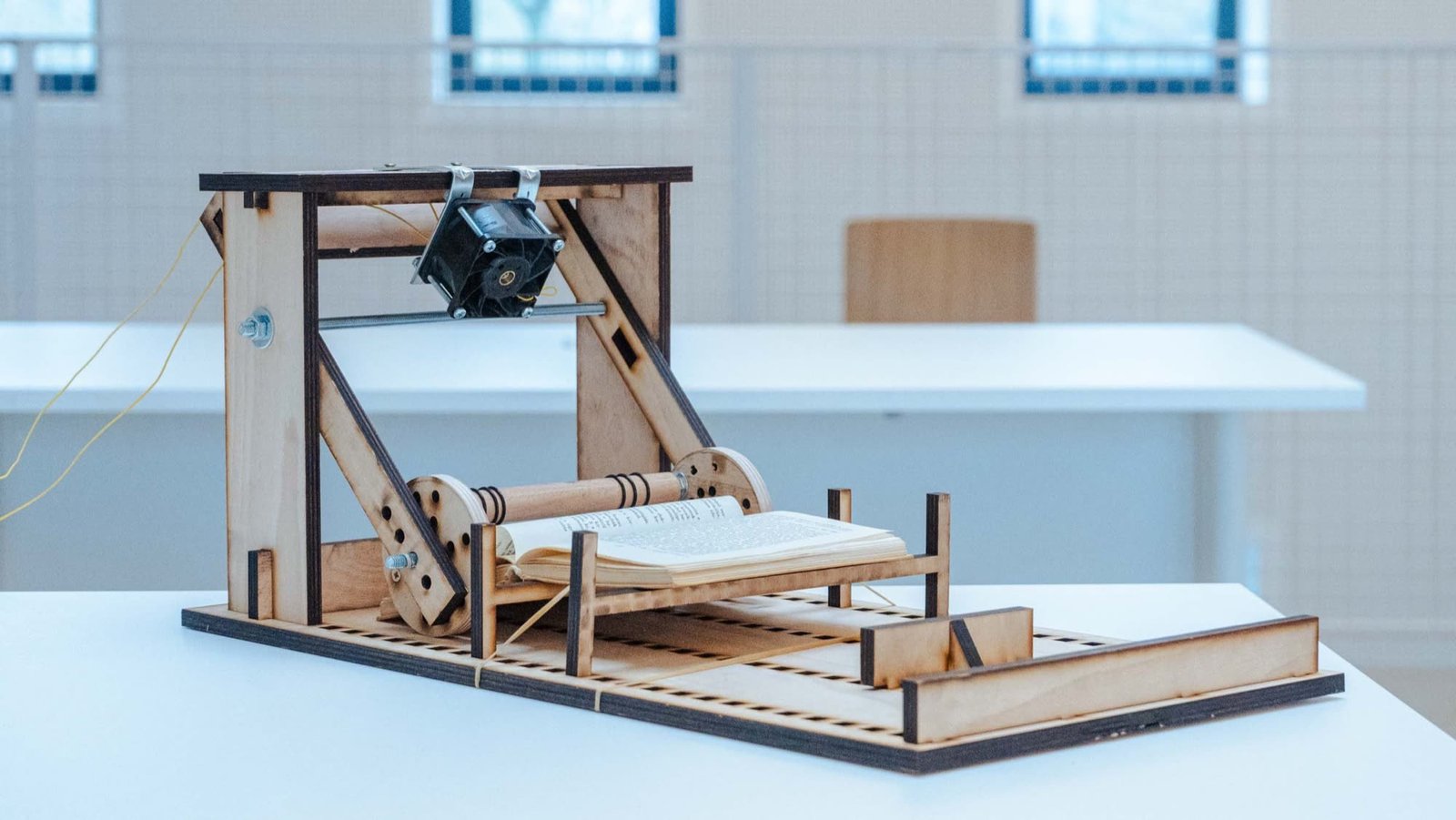
Today, when a good part of life happens on the internet, almost everything is available online. Many books are too, one way or another — but far from all of them, even though it would often be very useful. For that, it has to be possible to expand the range of digital books with simple, affordable book scanners. In our research and development project we designed and prototyped an open source book scanner.
The goal was a device that is simple, built from cheap materials available anywhere, assembled from easy-to-follow plans by anyone with a little skill. It was important that the process be automated, and that a book need to be turned over at most once during scanning.
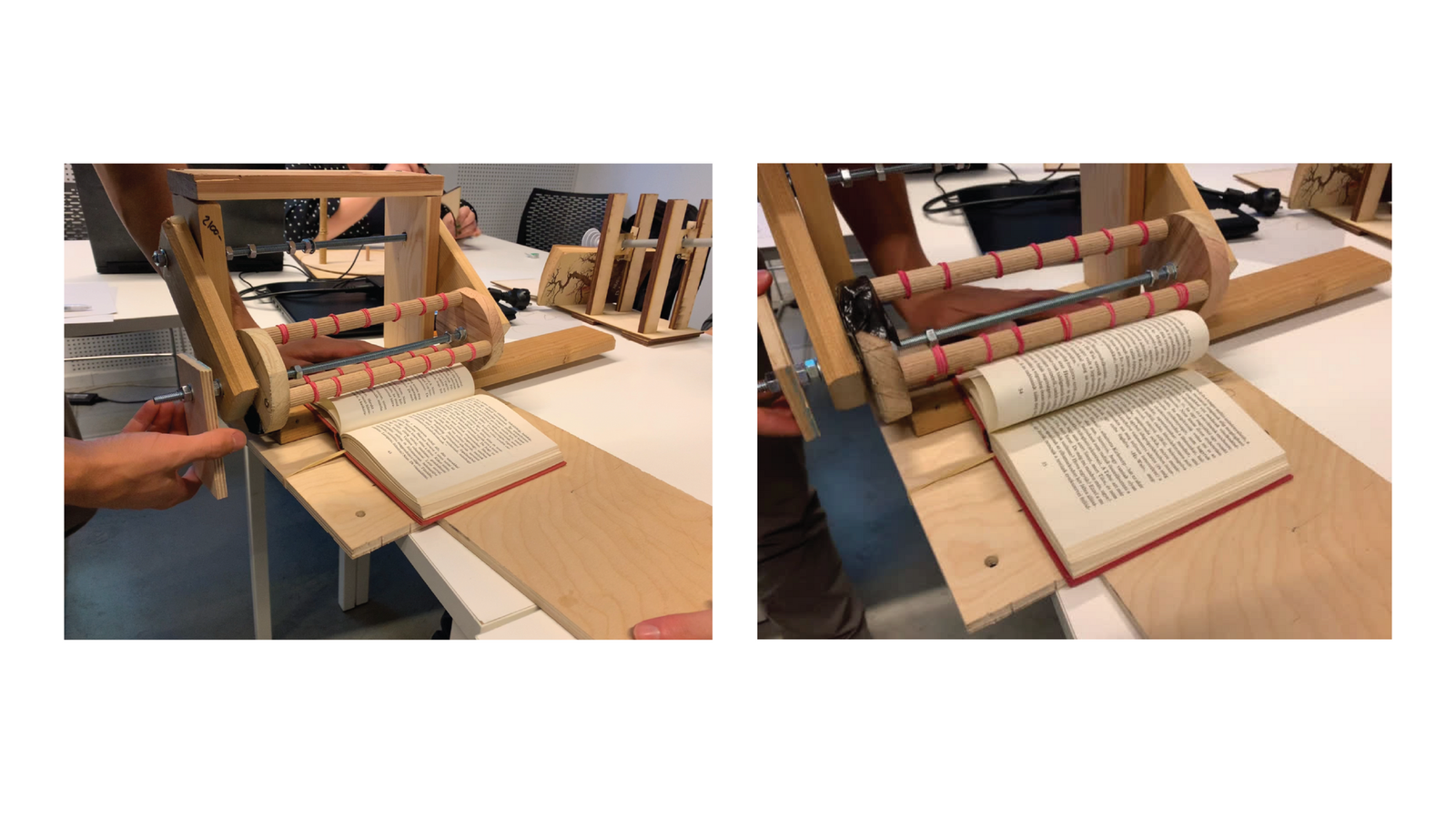
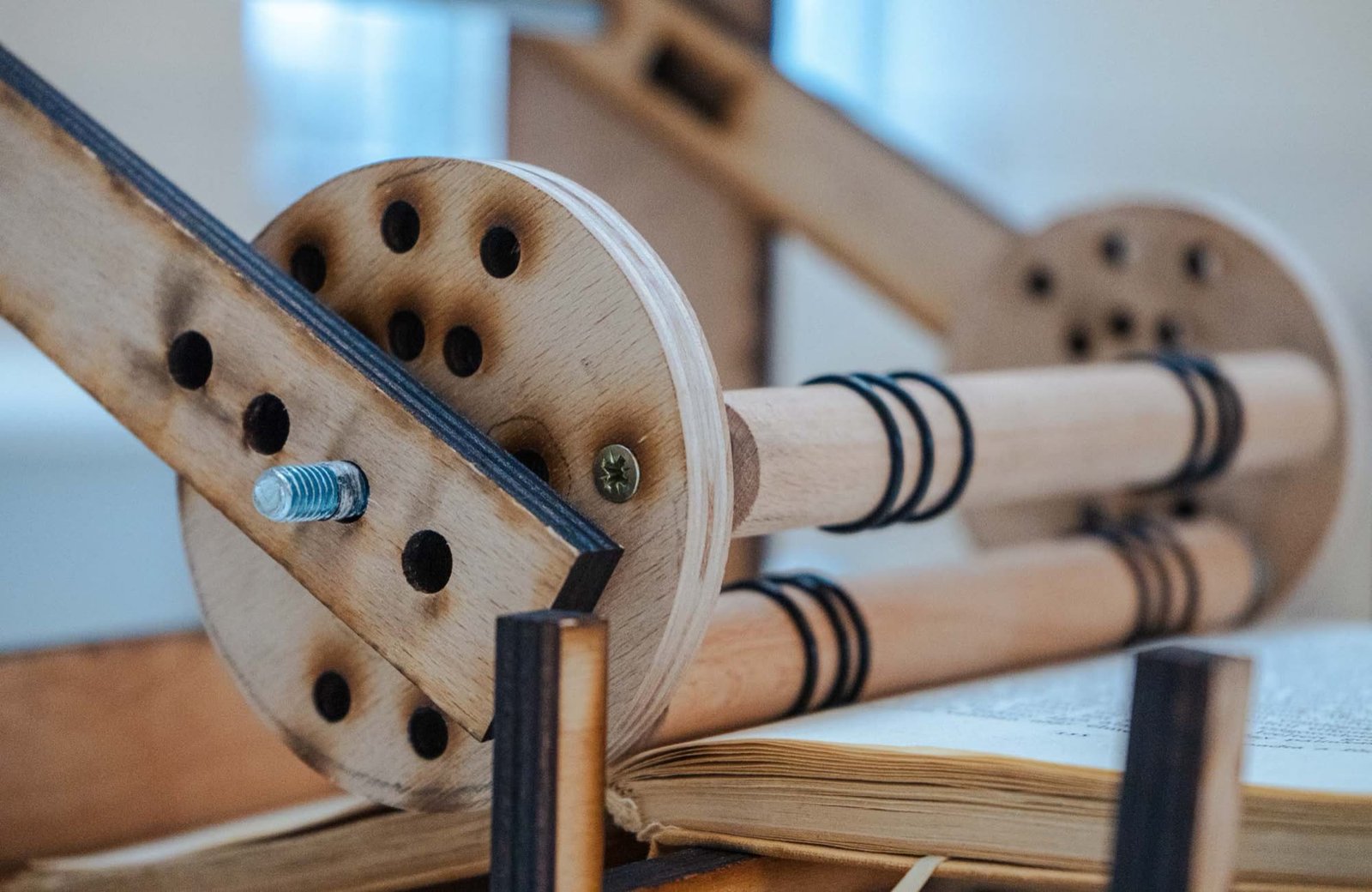
The result is a prototype that models the mechanical movements of the device.
The goal was a device that is simple, built from cheap materials available anywhere, assembled from easy-to-follow plans by anyone with a little skill. It was important that the process be automated, and that a book need to be turned over at most once during scanning.
The result is a prototype that models the mechanical movements of the device.
Info
Design
Supervisor
Genre
Year
Design
Gergő Gábor Péri, Fanni Szalai
Supervisor
Ádám Krasz, Kristóf Kovács
Genre
wooden prototype
Year
How It Was Made
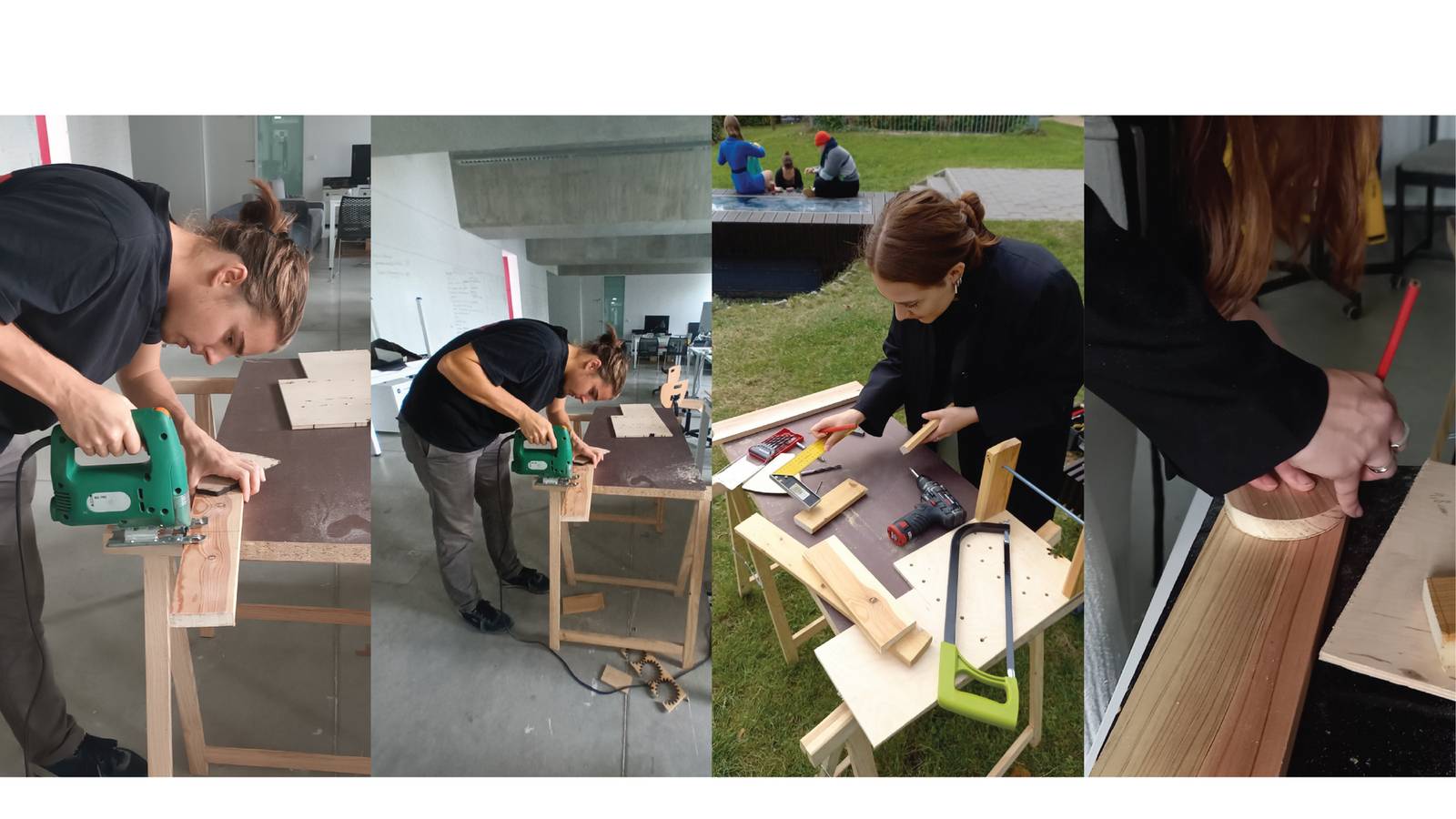
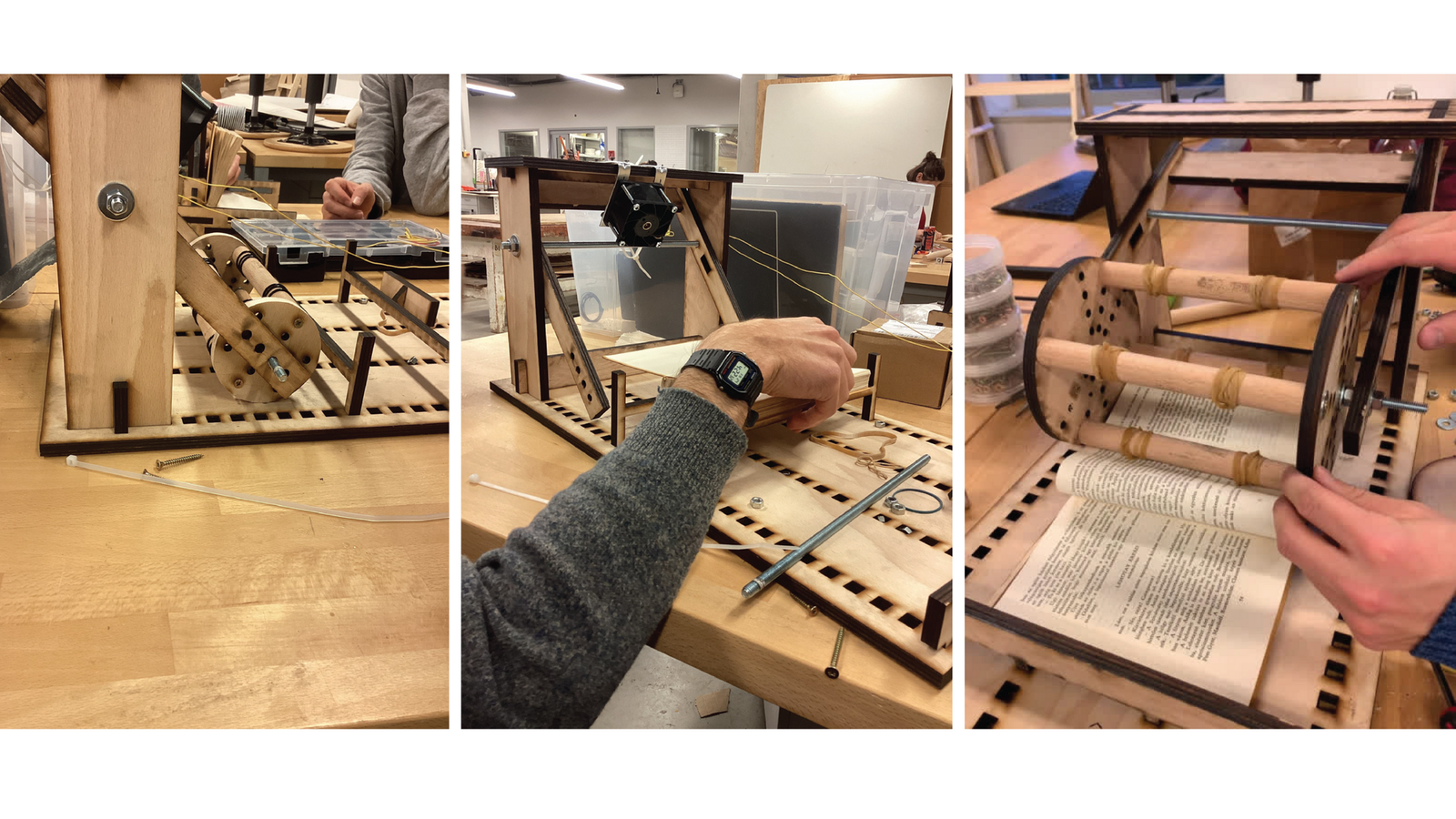
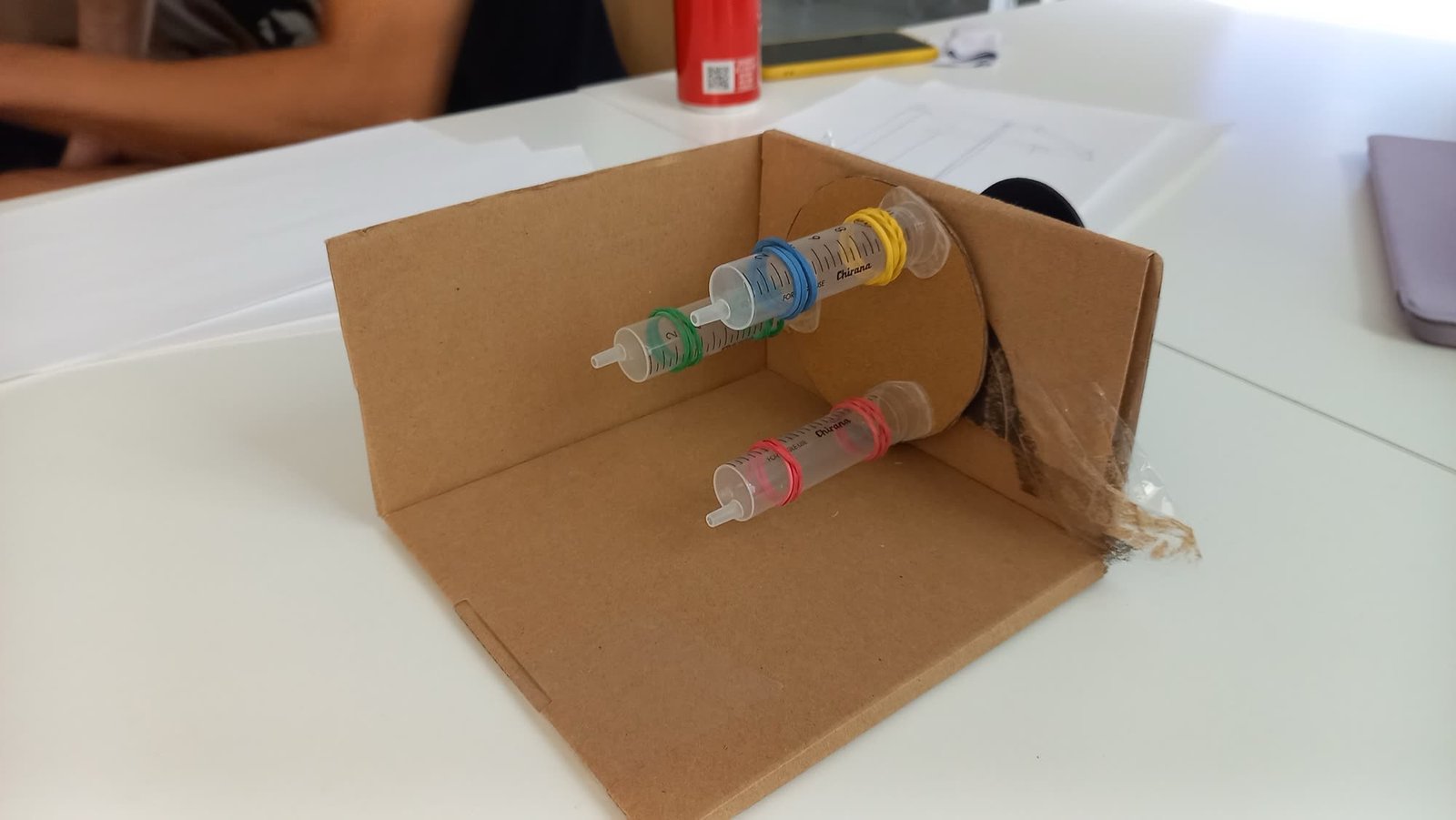
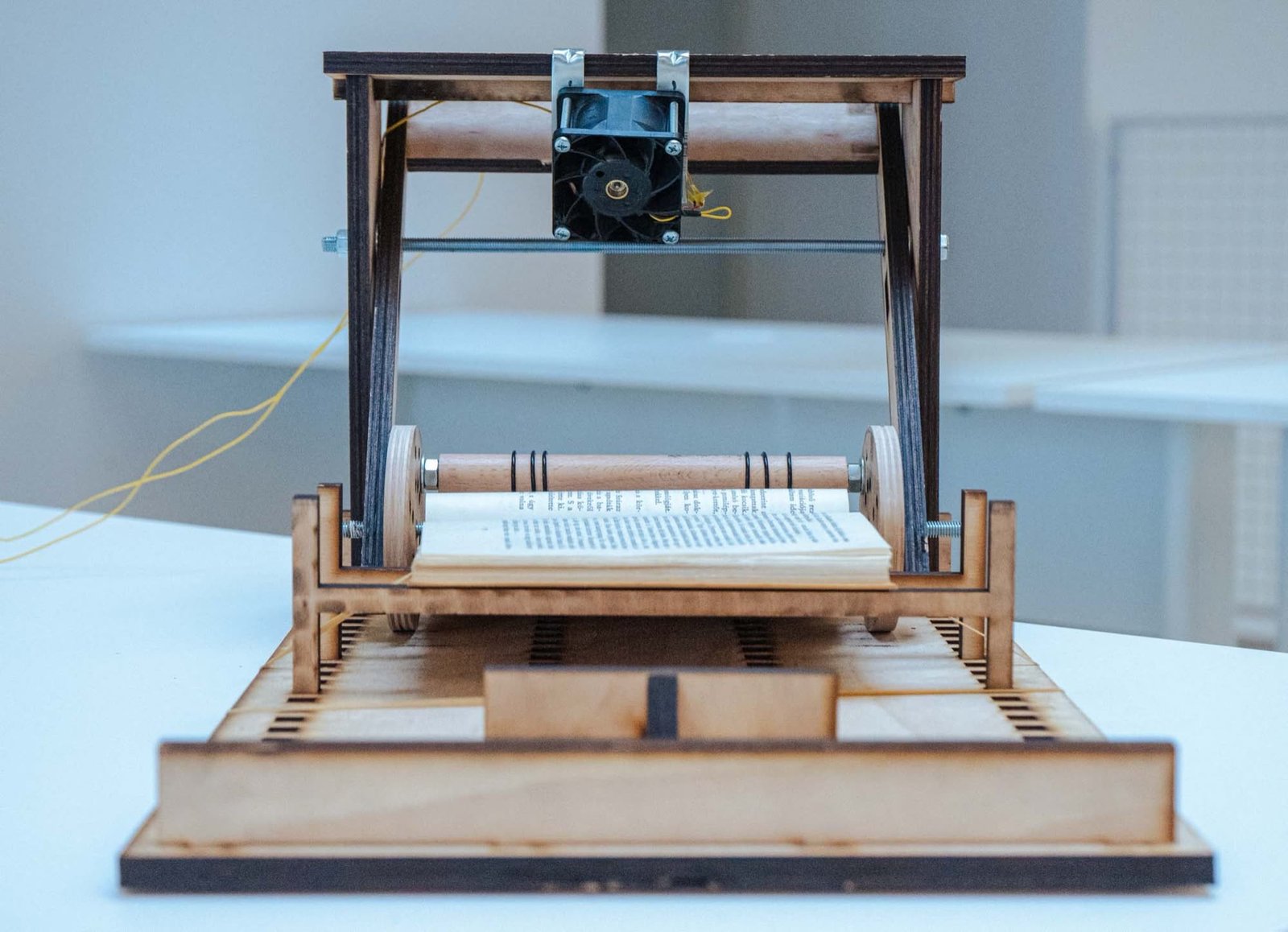
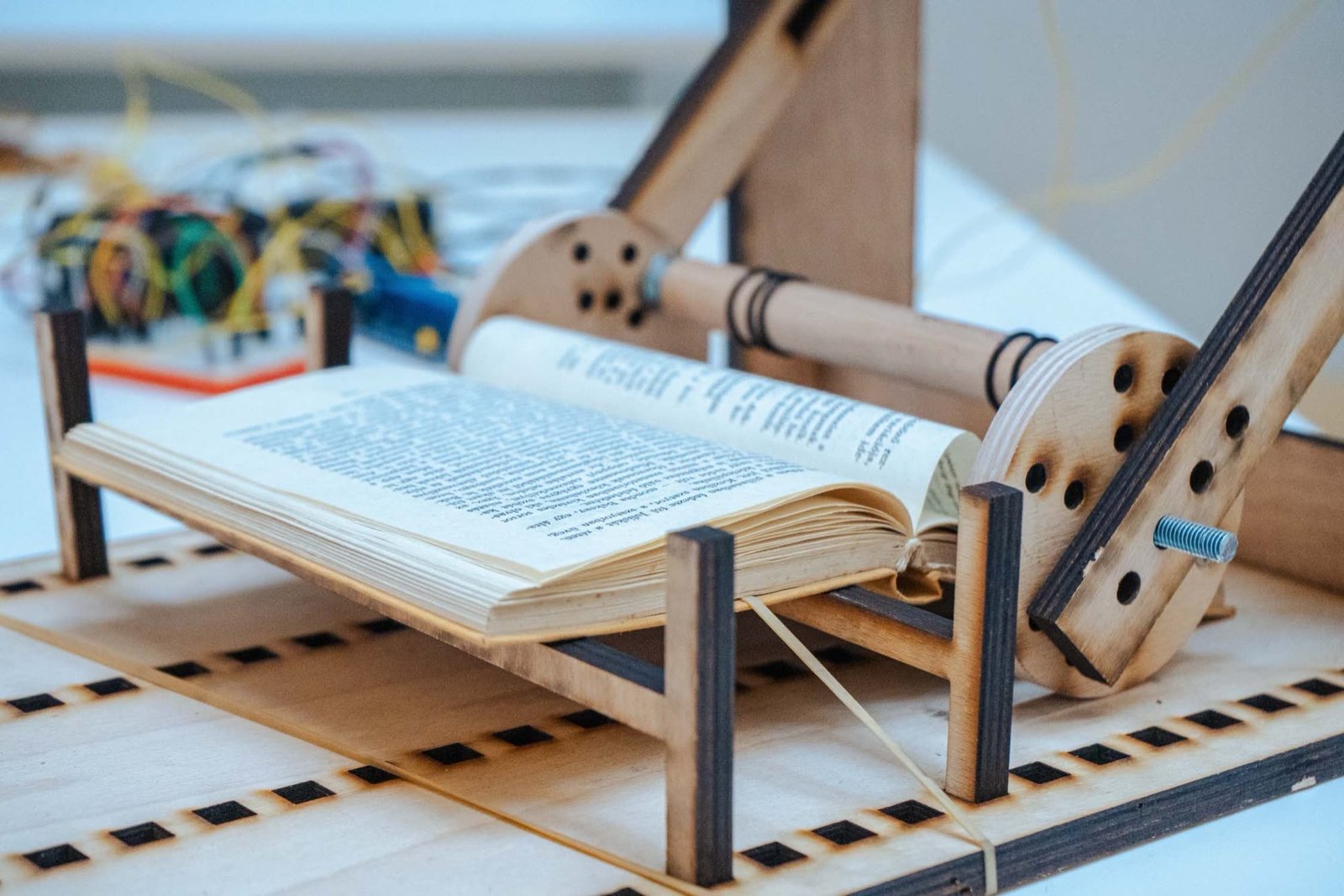
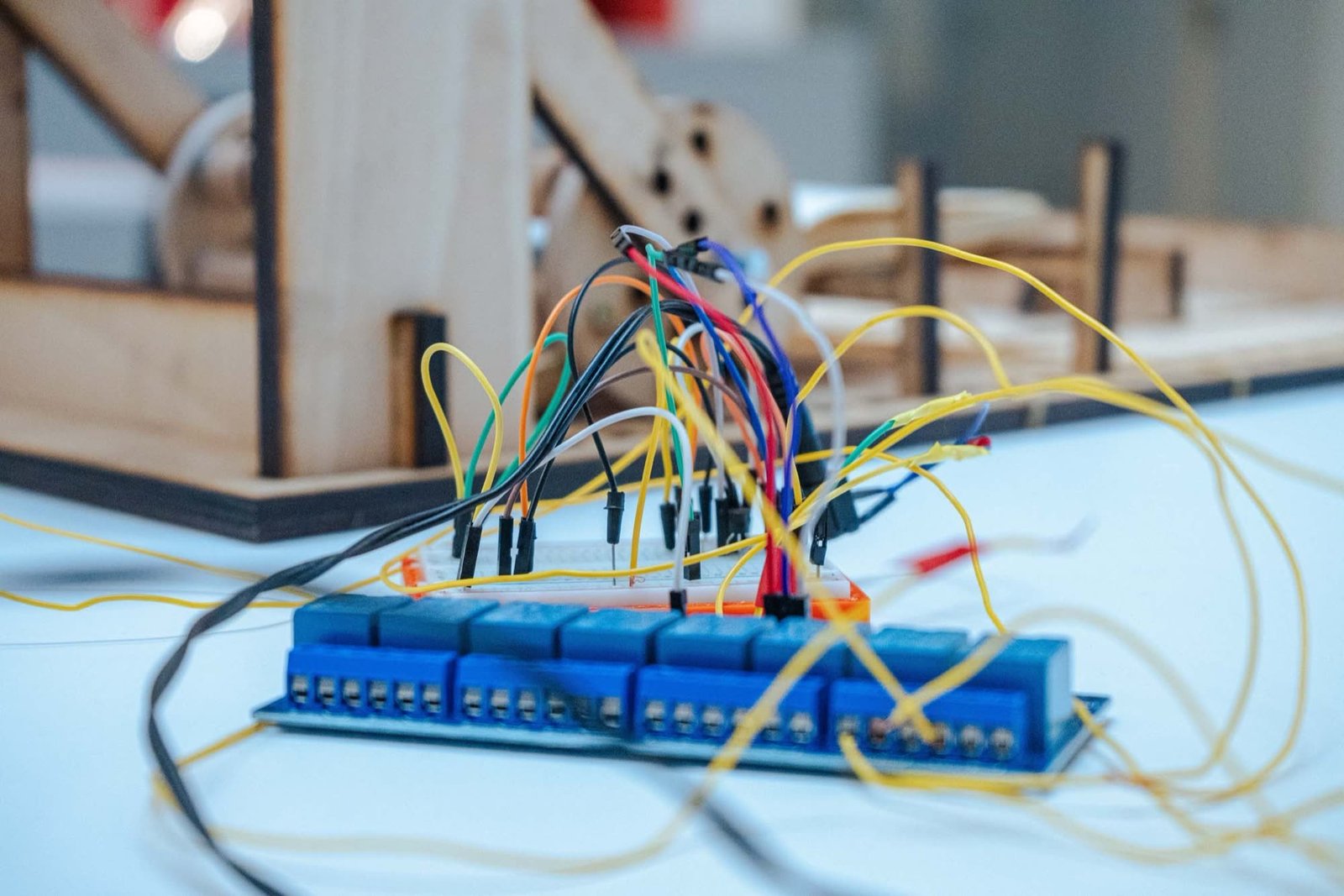
Automating page-by-page turning proved to be the hardest part; for this we tried to borrow the mechanics of banknote counters. Three prototypes were built in total: the first from cardboard, the second from wooden strips, and the third laser-cut from plywood based on a 3D model. We also experimented with a microcontroller-driven fan to turn the pages.
Automating page-by-page turning proved to be the hardest part; for this we tried to borrow the mechanics of banknote counters. Three prototypes were built in total: the first from cardboard, the second from wooden strips, and the third laser-cut from plywood based on a 3D model. We also experimented with a microcontroller-driven fan to turn the pages.